Brazil Controls 54% of Soybean Exports
Brazil Dominates Global Soybean Exports, with China as Top Importer
Brazil Controls Over Half of Global Soybean Exports: A Dominant Market Player
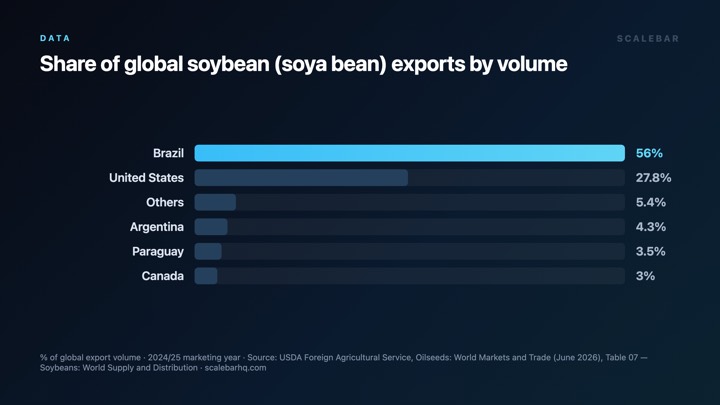
Brazil is a powerhouse in the global soybean trade, exporting approximately 54% of all soybeans worldwide. This dominance underscores its critical role in shaping market dynamics and influencing prices. According to data from various sources, including the United States Department of Agriculture (USDA) and FarmDocDaily, Brazil's share of global soybean exports is substantial, contributing significantly to the overall supply.
Key Players in Soybean Trade
- Brazil: With a 54% market share, Brazil leads the pack. The country's vast agricultural lands and efficient production methods make it a key player in the global soybean trade. In 2021, China was the largest importer of soybeans, with an import volume of approximately 96.5 million metric tons.
- United States: The United States contributes roughly one-third of global soybean production, making it another significant market participant. Together, Brazil and the United States account for about two-thirds of global soybean exports, underscoring their combined influence on the market.
Market Dynamics and Trade Patterns
The dominance of Brazil in soybean exports is not just a matter of quantity but also quality. Brazilian soybeans are known for their high yield and consistent quality, making them highly sought after by importers around the world. This preference has led to a steady demand from countries like China, which relies heavily on imported soybeans for its livestock feed and food industries.
Impact on Global Prices
The significant share of Brazil in global soybean exports means that any changes in Brazilian production or export policies can have a substantial impact on global prices. For instance, if there is a decrease in Brazilian exports due to weather conditions or other factors, it could lead to an increase in global soybean prices as the supply tightens.
Future Outlook and Challenges
Looking ahead, Brazil's dominance in soybean exports may face challenges such as environmental concerns related to deforestation and sustainable farming practices. However, despite these challenges, Brazil remains a key player in the global market due to its vast agricultural resources and efficient production methods.
Frequently Asked Questions (FAQs)
Q: How does Brazil's dominance affect global soybean prices?
A: Brazil's control over 54% of global soybean exports significantly influences global prices. Any changes in Brazilian export volumes can lead to fluctuations in the market, affecting both producers and consumers worldwide.
Q: Why is China a major importer of soybeans from Brazil?
A: China imports approximately 96.5 million metric tons of soybeans annually, making it the largest importer. The demand stems from its extensive use of soybeans for livestock feed and food industries, which require large quantities of high-quality soybeans.
Q: What role does the United States play in global soybean trade?
A: The United States contributes roughly one-third of global soybean production, making it a key player alongside Brazil. Together, they account for about two-thirds of global soybean exports, highlighting their combined influence on market dynamics.
Q: Are there any environmental concerns related to Brazil's dominance in soybean exports?
A: Yes, there are environmental concerns linked to deforestation and sustainable farming practices. However, despite these challenges, Brazil remains a significant player due to its vast agricultural resources and efficient production methods.
Q: How does the global market respond to changes in Brazilian export policies?
A: Changes in Brazilian export policies can have a substantial impact on the global soybean market. Any shifts in supply or demand can lead to price fluctuations, affecting producers and consumers worldwide.
Conclusion
Brazil's control over 54% of global soybean exports highlights its significant role in shaping the global trade dynamics and prices of soybeans. With China as a major importer and the United States contributing significantly to production, the market is dominated by these key players. Understanding their roles and interactions can provide valuable insights into the future of the global soybean industry.
Frequently asked
- How does Brazil's dominance affect global soybean prices?
- Brazil's control over 54% of global soybean exports significantly influences global prices. Any changes in Brazilian export volumes can lead to fluctuations in the market, affecting both producers and consumers worldwide.
- Why is China a major importer of soybeans from Brazil?
- China imports approximately 96.5 million metric tons of soybeans annually, making it the largest importer. The demand stems from its extensive use of soybeans for livestock feed and food industries, which require large quantities of high-quality soybeans.
- What role does the United States play in global soybean trade?
- The United States contributes roughly one-third of global soybean production, making it a key player alongside Brazil. Together, they account for about two-thirds of global soybean exports, highlighting their combined influence on market dynamics.
- Are there any environmental concerns related to Brazil's dominance in soybean exports?
- Yes, there are environmental concerns linked to deforestation and sustainable farming practices. However, despite these challenges, Brazil remains a significant player due to its vast agricultural resources and efficient production methods.
- How does the global market respond to changes in Brazilian export policies?
- Changes in Brazilian export policies can have a substantial impact on the global soybean market. Any shifts in supply or demand can lead to price fluctuations, affecting producers and consumers worldwide.
Sources
- https://farmdocdaily.illinois.edu/2024/02/the-united-states-brazil-and-china-soybean-triangle-a-20-year-analysis.html
- https://southernagtoday.org/2024/10/02/brazil-expected-to-continue-dominance-of-global-soybean-exports/
- https://www.ams.usda.gov/sites/default/files/media/BrazilOverview2021.pdf
- https://www.sei.org/features/brazilian-soy-exports-and-deforestation/
- https://www.statista.com/statistics/192058/production-of-soybeans-for-beans-in-the-us-since-2000/, https://farmdocdaily.illinois.edu/2024/02/the-united-states-brazil-and-china-soybean-triangle-a-20-year-analysis.html, http://www.ers.usda.gov/topics/crops/soybeans-and-oil-crops/oil-crops-sector-at-a-glance, https://www.iisd.org/system/files/2024-02/2024-global-market-report-soybean.pdf
- https://www.thepigsite.com/news/2025/12/chinas-soybean-imports-hit-highest-november-since-2021